
What is processing?
Most people know that roasting or brewing have a large impact on coffee quality and taste. But one of the most important steps affecting taste happens long before roasting — coffee processing.
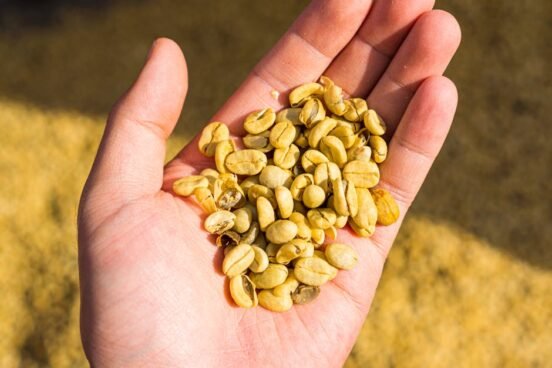
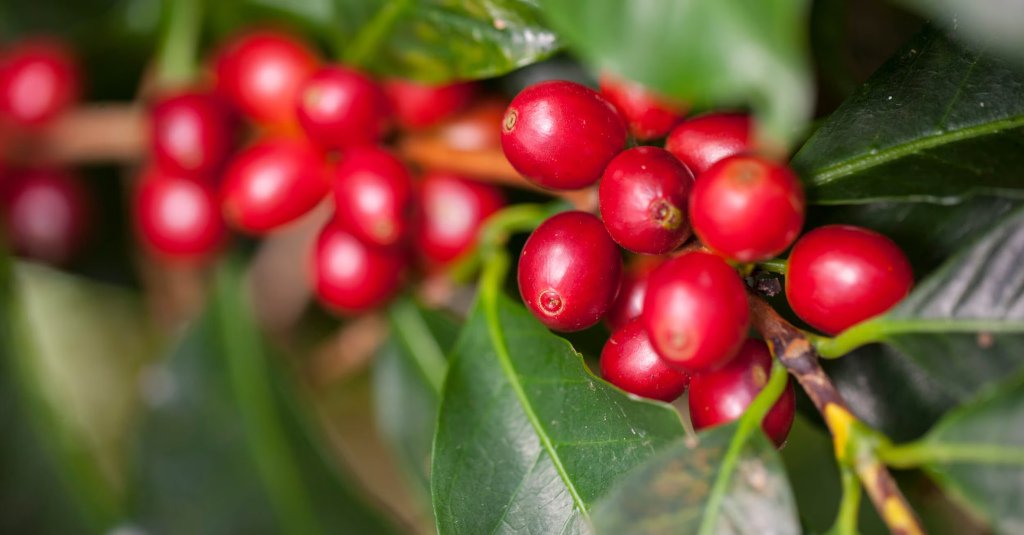
Processing simply refers to what happens to the coffee fruit after it is picked from the tree and before the beans are roasted. Coffee grows as a red fruit called a cherry. Inside that cherry are the beans that eventually become the coffee we drink. The way this fruit is removed and how the beans are dried has a big influence on flavor. In fact, different coffee processing methods can create very different taste experiences even from the same coffee farm.
There are three traditional processing methods used around the world: washed (wet), natural (dry), and honey processing.

Washed (Wet) Process
In the washed process, the fruit skin is removed from the cherries soon after harvesting. The beans are then washed with water and dried before being prepared for roasting. This method produces coffee that is often described as clean, bright, and balanced, allowing the natural character of the bean to stand out clearly. Because the fruit is removed early, the flavors tend to be more delicate and refined.
At Gharaam Coffee, our partner processor uses high-quality wet processing technology. During this step, the beans pass through water channels where lower-quality beans that contain defects or gas naturally float and are removed. The good, dense beans sink and continue to the next stage. After washing, the beans are sun-dried for about five days until they reach the proper moisture level.
Learn more about our coffee beans here.

Natural (Dry) Process
Natural processing is the oldest method and is still widely used in many coffee-producing regions. In this method, the entire cherry is dried in the sun before the fruit layers are removed.
Because the beans remain inside the fruit during drying, they absorb some of the natural sugars from the cherry. This often creates coffees that taste fruitier, sweeter, and fuller-bodied, sometimes with berry or tropical notes.
Honey Process
Honey processing sits somewhere between washed and natural methods. The outer skin of the cherry is removed, but some of the sticky fruit layer remains on the beans while they dry. The result is usually a coffee with pleasant sweetness, caramel-like flavors, and a balanced body — combining some of the clarity of washed coffee with some of the sweetness of natural processing.
New and Experimental Processing Methods
In recent years, some producers have begun experimenting with new techniques. One example is anaerobic fermentation, where coffee cherries ferment in sealed tanks without oxygen. This process can create very aromatic coffees with intense fruity or wine-like flavors.
Another emerging technique is carbonic maceration, inspired by winemaking, where cherries ferment in a carbon-dioxide-rich environment to produce complex fruit flavors.
These experimental methods are still relatively uncommon but show how creative coffee processing can be.
Sorting and quality control
Processing doesn’t end with drying. Afterward, the beans are sorted into different grades.
High-quality coffee should have beans that are uniform in size and free from defects. In coffee, defects can include broken beans, insect-damaged beans, unripe beans, or beans that were improperly dried.
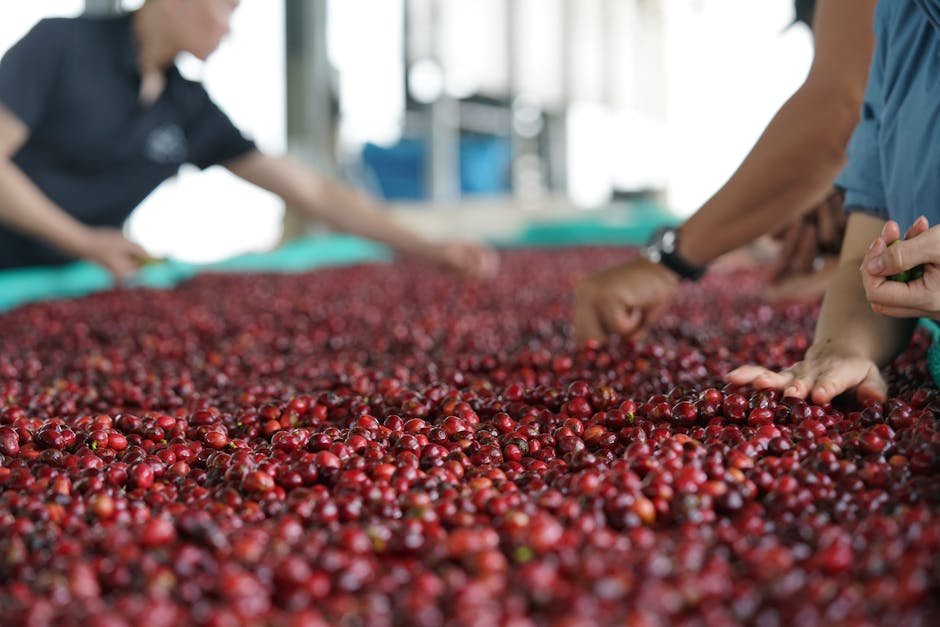
To ensure quality, coffee beans are first passed through sieves that separate them by size, creating uniform batches that roast evenly. After that, many specialty coffees are sorted by hand, where trained workers remove any defective beans.
At Gharaam Coffee, our beans go through both steps. After mechanical sorting, farming families manually inspect and sort the beans to ensure only the best ones remain.
Why Processing Matters
Great coffee doesn’t happen by accident. Careful harvesting, processing, drying, and sorting all play an essential role in shaping flavor. When these steps are done well, the result is a cup of coffee that is clean, balanced, and free from bitterness — allowing the natural sweetness of the beans to shine.
Understanding these processes helps us appreciate the long journey every cup of coffee takes — from a red cherry on a mountain farm to the coffee in your mug.
